


Salesforce After Q3 FY26 Earnings: High-Margin AI Platform, Solid Growth

Salesforce delivered a quarter that was operationally excellent but not growth-explosive: Revenue around $10.3B, growing high single digits year-on-year. Non-GAAP operating margin in the mid-30s, at or near record levels. Free cash flow above $2B for the quarter, with healthy double-digit growth. AI stack (Agentforce, Data Cloud, Einstein) now represents meaningful, recurring ARR, scaling quickly off a small base. Guidance frames high-single-digit to low-double-digit top-line growth with mid-30s non-GAAP margin for the full year. The equity story is shifting from “hyper-growth CRM pioneer” to “AI-enhanced, cash-rich enterprise platform compounder.”

NVIDIA Buybacks: A Frank Assessment of Value, Signal, and Risk

NVIDIA’s buybacks do create shareholder value — just not in the dramatic, thesis-driving way some bulls think, nor in the self-destructive way critics like Michael Burry argue. The repurchase program works because it: Offsets very large SBC issuance, Provides real share-count shrink, Adds ~1% EPS uplift versus a no-buyback world, And acts as downside liquidity support. But the program is not the engine of NVIDIA’s stock performance. The stock trades on AI data-center earnings, TSMC/HBM/CoWoS supply, hyperscaler capex, and macro positioning, not on the authorization size.

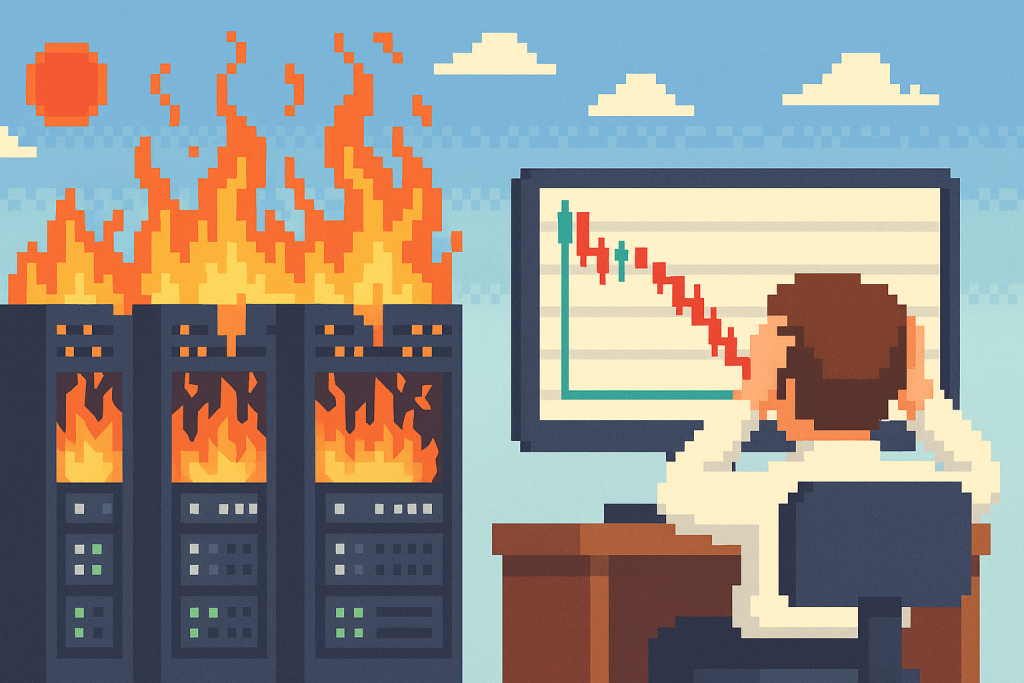
The Data Center Cooling Trade: Who Wins After the CME Outage

When a single overheated facility can shut down one of the world’s most important futures exchanges, “data center cooling” stops being a boring line item and becomes systemic risk. That’s exactly what the CME outage highlighted: AI-heavy racks are now drawing so much power per square foot that cooling, not servers, is the choke point. Over the next 12–24 months, the easiest response for exchanges, hyperscalers, and colo operators is simple: spend more on cooling, and spend it faster. This piece maps the likely corporate winners from that shift and sketches out where the upside still looks compelling vs where the market is already paying full price.

Is the December Cut Already Priced In?A Playbook for Trading the Next Fed Move.

The market has effectively accepted a December rate cut as a done deal. Fed funds futures, the shape of the curve, and rate-sensitive sectors all point to a high probability of a 25 bp move. The real mispricing isn’t in whether the Fed cuts, but in how far and how fast the easing cycle runs from here. A single “risk-management” cut is mostly in the price; a smooth, dovish glidepath through 2026 is not guaranteed. The right approach is to treat this as a hedging environment: harvest a bit of upside if the Fed leans dovish, but be paid if they disappoint and re-assert a higher-for-longer stance.

The Real Question Isn’t “GOOGL’s TPU vs NVDA’s GPU” – It’s Where Each Wins

NVIDIA and Google are winning in different lanes of the AI stack: Blackwell GB300/NVL72 still dominates frontier training and CUDA-heavy workloads, while Google’s TPU v7 “Ironwood” fabric is emerging as the better choice for large-scale, cost-sensitive LLM inference, often at meaningfully lower cost per token. The likely end state is a hybrid world - GPUs for cutting-edge training, TPUs for much of production serving. This is exactly why the stocks should be viewed differently: NVIDIA is a concentrated, fairly valued bet on continued AI accelerator spend, whereas Alphabet is a more diversified, cash-rich platform (Search, YouTube, Cloud) with TPU-driven AI infrastructure upside that is not yet fully reflected in its valuation.

Lumentum (LITE): InP Inside the AI Optical Super-Cycle – but Priced Like It Already Won

Lumentum is a high-quality, vertically integrated indium-phosphide (InP) optics supplier sitting directly in the slipstream of the AI data-center build-out, with record revenue, rapidly recovering margins, and a second growth engine emerging in optical circuit switching. The business is strong, strategically relevant, and executing well - but the stock, up ~240% YTD and trading near 195x trailing earnings, already reflects a lot of optimism. Great business, stretched valuation: accumulate on dips and use hedges or smaller sizing to keep the upside while managing risk.

2025–26 M&A Target Playbook: U.S. & Canadian Takeover Candidates

The most credible 2025–26 takeover candidates are Atkore, Cascades, Box, Brookdale Senior Living, Ardagh Metal Packaging, and GitLab - all trading below strategic value with clear synergy potential and active buyer universes. Atkore and Cascades lead on probability given strong cash flow and footprint synergies, while Box and GitLab fit cleanly into larger software platforms, and Brookdale offers REIT-backed roll-up economics.

M&A Target Analysis: Tier 1 Acquisition Opportunities with Probability-Weighted Valuations

This report outlines four high-probability M&A archetypes - UK generics, AI-ready data centers, healthcare workflow platforms, and packaging carve-outs - each modeled with realistic valuation math, synergy capture, and regulatory adjustments. Together they show where strategic and private-equity buyers are most likely to hunt next, how much they can justify paying, and why public markets often underprice these assets before a bid.

Apple (AAPL) Options Trade: Exploiting Post-Earnings IV Compression and the iPhone 17 Catalyst

Wait until after tomorrow's (Oct 30) earnings, then enter a ratio call spread (buy 2x Dec $260 calls, sell 3x Dec $270 calls) for ~$400 credit when IV crushes to 23-24%. The edge: IV at 34th percentile will likely expand back toward its median (28-30%), generating 50-80% returns with max profit at $270. Downside capped at $256, but unlimited upside risk above $283 requires active management. Massive institutional call wall at 280-320 validates the bullish thesis on iPhone 17 strength and China recovery.

Credo Technology (CRDO): AI Connectivity Play at Premium Valuation

Credo Technology has emerged as a leading provider of high-speed connectivity solutions for AI infrastructure, delivering explosive 274% year-over-year revenue growth driven by Active Electrical Cable (AEC) shipments to hyperscalers. However, the stock trades at a substantial premium, approximately 40-44x trailing sales, pricing in continued flawless execution amid intensifying competition and potential technology disruption.