

Investigative Analysis

Available Reports
15 Active research reports

The $105 Billion AI Bet: Is Oracle’s Bond Market Stress a Systemic Risk?

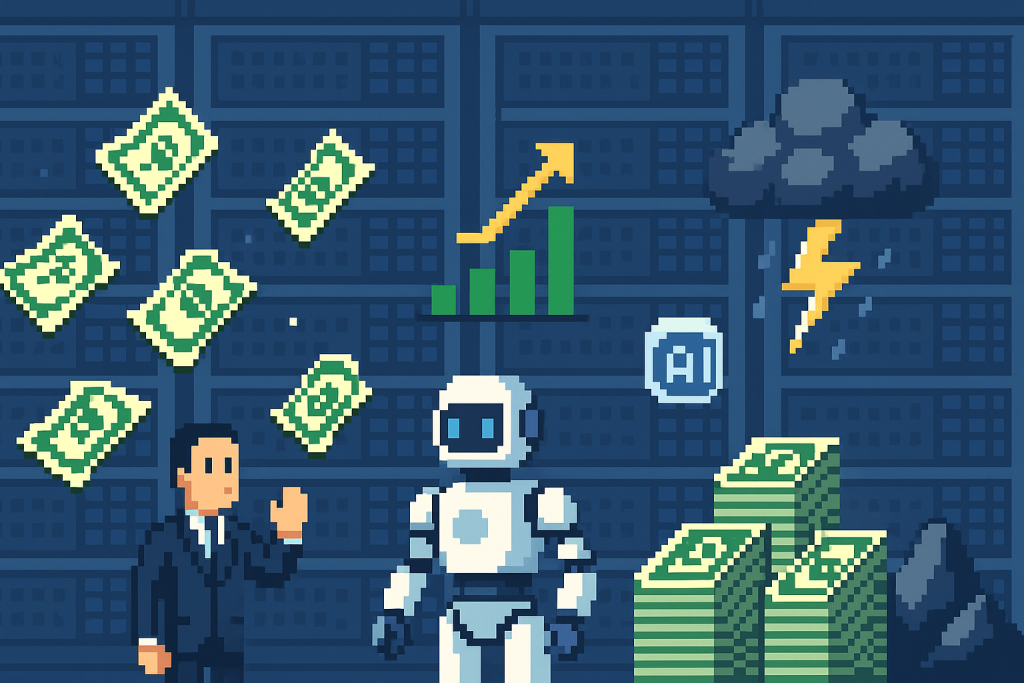
Oracle’s credit risk has sharply repriced, with its 5-year CDS spiking to the highest level since 2009—roughly tripling from mid-year—as investors hedge a debt-funded AI expansion with uncertain payback. Its balance sheet now resembles a leveraged AI infrastructure project, carrying about $105B in total debt and roughly $95B in U.S. bonds, making it the largest non-bank issuer in major indices; leverage is above 4× debt/EBITDA, and levered free cash flow is negative as capex surges. Rating agencies still keep Oracle investment grade but have moved outlooks to Negative, citing massive AI cloud commitments and sustained negative free cash flow. Across the AI complex, more than $200B in related bond issuance has come to market as hyperscalers and data-center operators raise capital aggressively. Systemic risk is creeping higher, but Oracle itself is viewed as a stress indicator—not a systemic trigger—in the emerging AI credit web.

NVIDIA Buybacks: A Frank Assessment of Value, Signal, and Risk

NVIDIA’s buybacks do create shareholder value — just not in the dramatic, thesis-driving way some bulls think, nor in the self-destructive way critics like Michael Burry argue. The repurchase program works because it: Offsets very large SBC issuance, Provides real share-count shrink, Adds ~1% EPS uplift versus a no-buyback world, And acts as downside liquidity support. But the program is not the engine of NVIDIA’s stock performance. The stock trades on AI data-center earnings, TSMC/HBM/CoWoS supply, hyperscaler capex, and macro positioning, not on the authorization size.

The Data Center Cooling Trade: Who Wins After the CME Outage

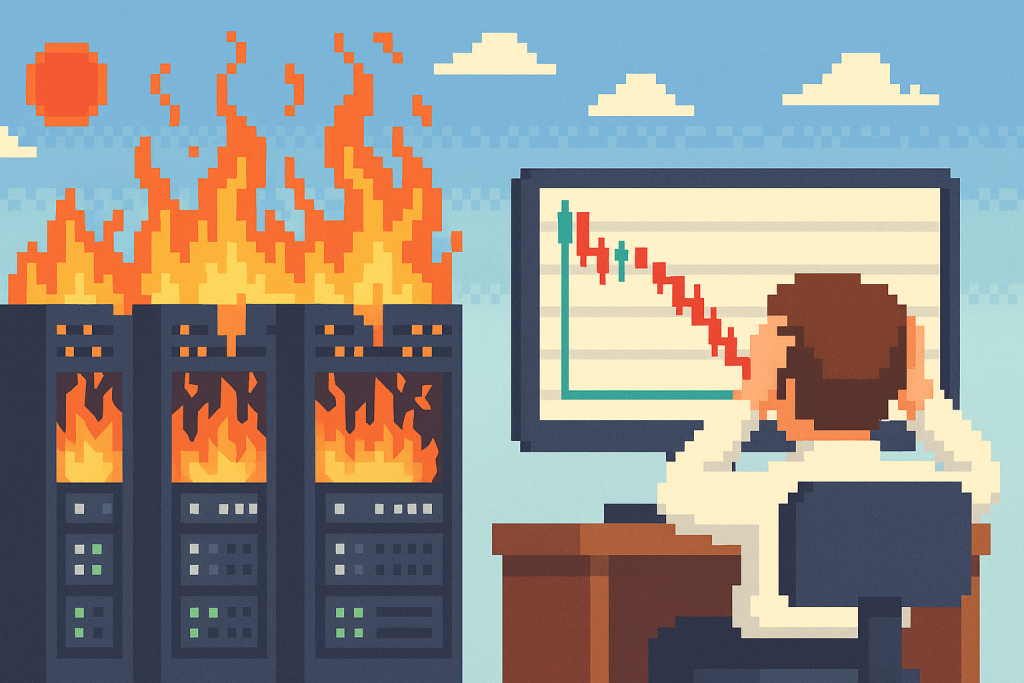
When a single overheated facility can shut down one of the world’s most important futures exchanges, “data center cooling” stops being a boring line item and becomes systemic risk. That’s exactly what the CME outage highlighted: AI-heavy racks are now drawing so much power per square foot that cooling, not servers, is the choke point. Over the next 12–24 months, the easiest response for exchanges, hyperscalers, and colo operators is simple: spend more on cooling, and spend it faster. This piece maps the likely corporate winners from that shift and sketches out where the upside still looks compelling vs where the market is already paying full price.

The Real Question Isn’t “GOOGL’s TPU vs NVDA’s GPU” – It’s Where Each Wins

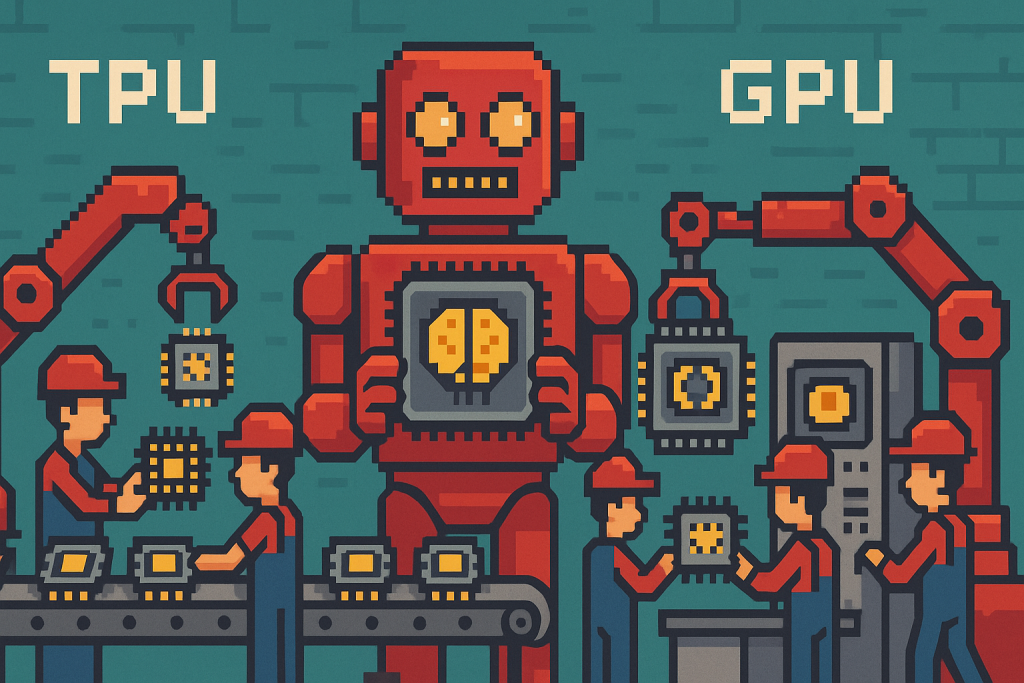
NVIDIA and Google are winning in different lanes of the AI stack: Blackwell GB300/NVL72 still dominates frontier training and CUDA-heavy workloads, while Google’s TPU v7 “Ironwood” fabric is emerging as the better choice for large-scale, cost-sensitive LLM inference, often at meaningfully lower cost per token. The likely end state is a hybrid world - GPUs for cutting-edge training, TPUs for much of production serving. This is exactly why the stocks should be viewed differently: NVIDIA is a concentrated, fairly valued bet on continued AI accelerator spend, whereas Alphabet is a more diversified, cash-rich platform (Search, YouTube, Cloud) with TPU-driven AI infrastructure upside that is not yet fully reflected in its valuation.

Figma: Paying $30B For An 800M-User Experiment

Figma's ChatGPT integration gives it access to 800 million users - if just 1.5% convert, that's $130-260M in new ARR reversing the deceleration that crushed the stock 57% from its August peak. At $60.94 (27.7x sales), yesterday's 7% pop priced in half the upside, leaving 23-35% to $75-82 if it works or 15-20% downside to $48-52 if it flops. Wait for pullback to $55-57 over the next month, validate at November earnings when management must show real ChatGPT user numbers, and use February's insider unlock as your entry window. For those wanting less risk, ServiceTitan trades at 10.9x sales with 32% upside and no experiments required.

Tesla: Reality Check at $460 – Energy’s Real, Robotaxi’s Years Away

At $460 per share ($1.48 trillion market cap) trading 225x earnings, Tesla needs flawless execution across automotive margin recovery, energy scaling, and autonomous deployment simultaneously. The probability is low. Also, Tesla just raised lease prices $70/month following expiration of the $7,500 federal tax credit—the first real-world test of demand elasticity without subsidies begins now.

The Magnificent 7 vs. The AI Infrastructure Play

The Magnificent 7 are expensive, cash-burning AI believers trading at 31-40x free cash flow while promising returns that might not materialize. A better bet is the companies selling them the shovels - the AI Infrastructure Compounders 7 (AIC-7), who are generating cash today while the hyperscalers burn through $417 billion this year alone.

The Crypto-Brokerage Convergence Trade: COIN vs HOOD in 2025

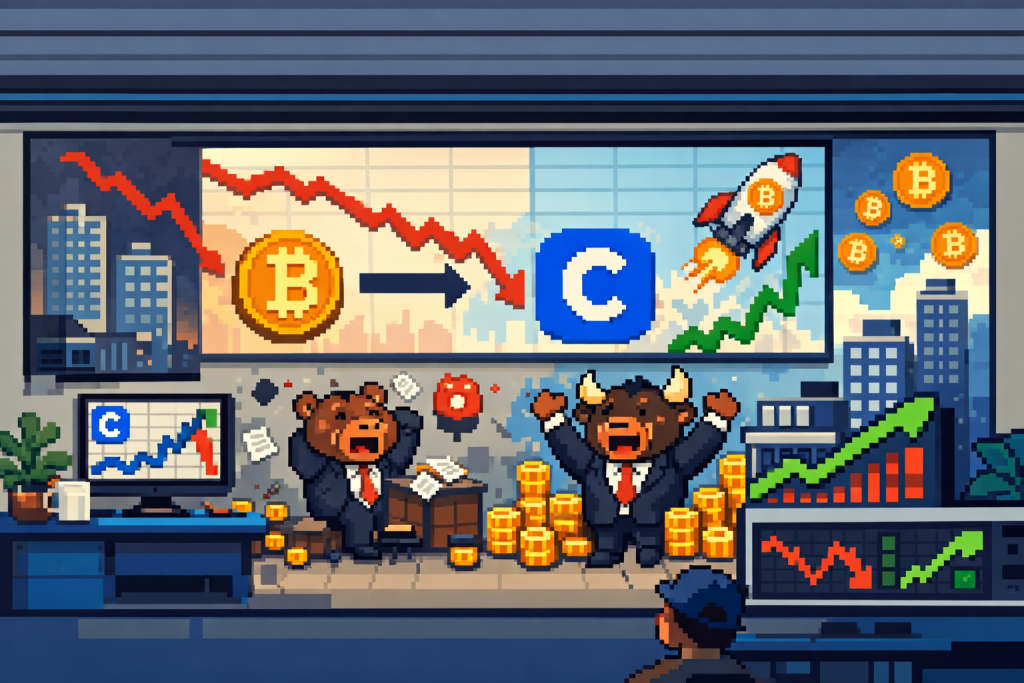
Coinbase (COIN) and Robinhood (HOOD) are converging on the same endgame—becoming the everything exchange for the next generation—but they're coming from opposite directions. And right now, the market has this completely backwards. COIN trades at 32x forward EBITDA while HOOD commands a princely 53x. That's a 40% valuation gap that makes zero sense when you dig into the fundamentals. We're looking at a masterclass in market inefficiency.

When Safe Assets Outperform Risk: The 2025 Portfolio Playbook

For the first time since Y2K, the math has flipped. The 10-year Treasury (~4.23%) now outyields the S&P 500's forward earnings yield (4.15%), creating a negative equity risk premium, a phenomenon we've seen exactly twice in modern history, both preceding significant market resets. But here's the kicker: inflation-protected bonds (TIPS) are paying 1.94% real while equity dividends deliver -1.1% after inflation. Translation: The "risk-free" rate isn't just competitive, it's winning.

Quantum Computing Sector Exposé: Separating Science from Speculation

The quantum computing sector has become a fascinating case study in millennial investing: equal parts revolutionary potential and venture-capital excess. With pure-play stocks trading at valuations that would make even crypto bros blush, it's time to separate the quantum wheat from the speculative chaff.