

HOOD

Robinhood in a Low-Volume Market: What Slower Trading Means for HOOD and the Market

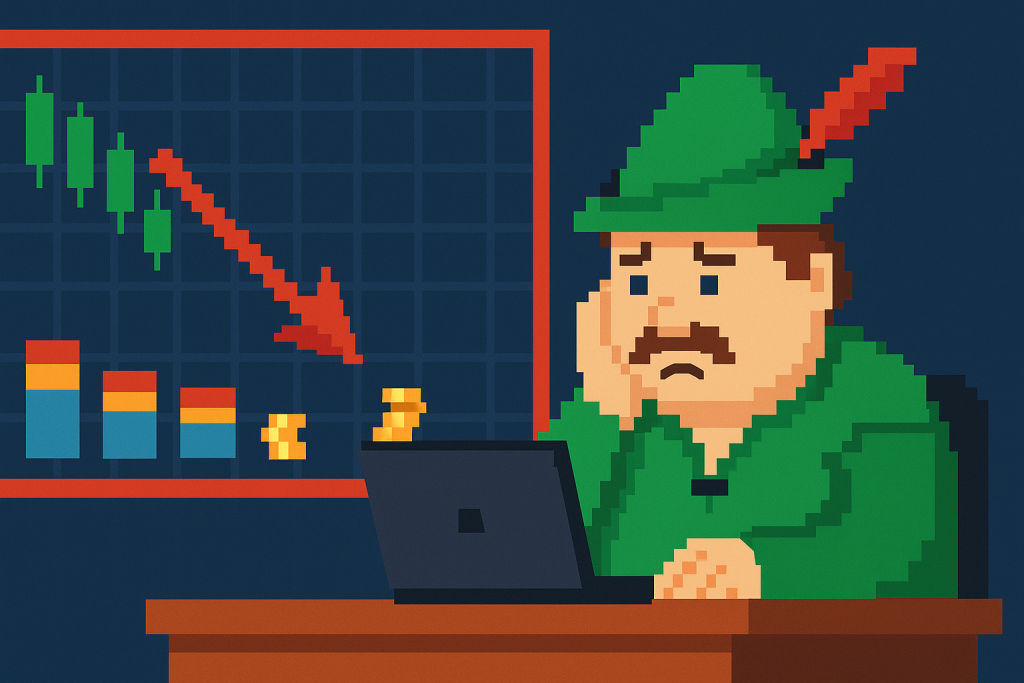
Sequentially, trading activity rolled over across almost every asset class. Equities and options saw sharp month-over-month drops, crypto cooled, and assets under custody ticked lower for the first time since February. The move was big enough to knock HOOD down ~8–9% in a day and force investors to revisit a simple question: Is this just a breather after a strong run, or a sign that retail risk appetite is structurally fading? On the numbers, November was a step down from very strong levels rather than a collapse. Year-over-year, Robinhood’s platform is still bigger and more active across most dimensions. But the business is levered to activity, not just assets, so when volumes roll over, the P&L and the stock feel it.


The Crypto-Brokerage Convergence Trade: COIN vs HOOD in 2025

Coinbase (COIN) and Robinhood (HOOD) are converging on the same endgame—becoming the everything exchange for the next generation—but they're coming from opposite directions. And right now, the market has this completely backwards. COIN trades at 32x forward EBITDA while HOOD commands a princely 53x. That's a 40% valuation gap that makes zero sense when you dig into the fundamentals. We're looking at a masterclass in market inefficiency.

Robinhood: When the Sheriff of Nottingham Becomes the Outlaw

Robinhood's 163% YTD rally to $100 on tokenization hype has pushed the market cap to over $85 billion with a forward P/E of 76.5x. You're now paying more for HOOD than you would for many S&P 500 companies—for a firm that just settled $45M in SEC violations while launching fake crypto tokens that even OpenAI disavows.